Get started as a WebXR developer: frameworks, engines, platforms and resources for building and publishing.
Key updates
WebXR news, refreshed weekly · updated October 28, 2026
Babylon.js 9.32.1
Patch release with native parity fixes across shaders, compute, particles, codecs and clustered lights, better WebGPU lifecycle handling, lower-memory KTX2 loading, Flow Graphs explorer parity in Inspector Lite, and an FBX import fix for rigs with inherited bone scale.
Why this is important: Babylon.js powers a large share of browser 3D and WebXR — a stability patch with no breaking changes is a safe pickup for teams shipping immersive scenes, and the Inspector Lite upgrades shorten the debug loop on headset-only bugs.
Google Play services adds Android XR glasses pairing
Google Play services v26.42 lets phones connect to Android XR glasses, per Google's October system-updates notes — one of the plumbing steps ahead of Samsung's Android XR glasses launch.
Why this is important: WebXR on Android XR glasses will run through the phone as companion and browser host, so phone-to-glasses pairing is a gating capability for the next class of WebXR-capable hardware.
Snapchat Web Lenses let developers package a web game as a Lens — Snap recommends PlayCanvas as the most capable engine for the format, and the first PlayCanvas games on Snapchat are already live, some reaching millions of plays.
Why this is important: A new distribution channel for browser games built with a WebXR-adjacent engine: the same PlayCanvas build skills behind web experiences now reach Snapchat's audience with nothing to install.
Rolling out the week of October 19 to Quest 3, 3S, Pro and 2: a spatial window manager for up to three windows, a built-in QR code scanner, notifications when an immersive app needs an input-method switch, and classic VR Home environments rebuilt.
Why this is important: Quest is where most GoXR visitors play, and 2.9 touches the browser journey directly: QR scanning opens web experiences faster, and input-switch notifications smooth the handoff into immersive WebXR sessions.
Patch release exposing WebGPU canvas tone-mapping and color-space options, plus fixes to render-target sRGB forwarding, MSDF text shaders, WebGL1 image sources, GPU particle attributes, and Flow Graph Editor export.
Why this is important: A low-migration-risk update for teams shipping Babylon.js 9.x that tightens WebGPU color management — the part of the pipeline keeping XR scenes consistent across Quest and Android XR browsers.
Ships a new Project Dashboard (search, stars, card/list views, fork/export/transfer, project settings, organizations) and lets an MCP agent connect before any project is open, with project-level tools to manage projects.
Why this is important: Editor projects publish straight to the web, so this matters for teams shipping WebXR experiences: AI coding agents can now manage PlayCanvas projects directly through MCP, shortening the loop from a prompt to a URL that opens on a headset.
Khronos announced XR_EXT_spatial_container and XR_EXT_spatial_container_self_rendering, letting apps run in system-managed bounded windows beside other apps and switch to immersive mode at runtime; OpenXR SDK 1.1.65 added matching sample code.
Why this is important: WebXR sessions sit on OpenXR runtimes, and containers rewrite session lifecycle — a container-enabled session stays idle while visibility and focus become per-container events — so WebXR developers should track which runtimes (Android XR, Quest) adopt it.
First beta of Godot 4.8 enters feature freeze, and its OpenXR integration carries the new spatial-container extensions — the first engine implementation of Khronos's bounded/immersive containers.
Why this is important: Godot's export path is one route teams use to reach browser XR, and its implementation is the reference to watch while no retail runtime ships the extensions yet.
WebXR/AI prototyping library adds a three.js WebGPU renderer in its desktop simulator, an on-device Gemma 4 assistant, and photo-to-3D reconstruction.
Why this is important: XR Blocks is Google's own guide to what a headset browser should do — on-device AI and photo-to-3D cut prototyping from days to minutes.
Patch release with WebGPU canvas tone mapping and color-space options plus WebGPU render-target and particle fixes.
Why this is important: Babylon powers a large share of browser 3D and WebXR — WebGPU fixes here mean better-looking, more stable immersive scenes everywhere.
A record 317 entries; WebXR-category winners announced October 5.
Why this is important: The WebXR category is a yearly pulse-check on what tiny, creative browser games can do in VR — past entries have ended up on GoXR.
Latest engine release in the WebGPU/WebGL2 line powering many browser 3D and WebXR projects.
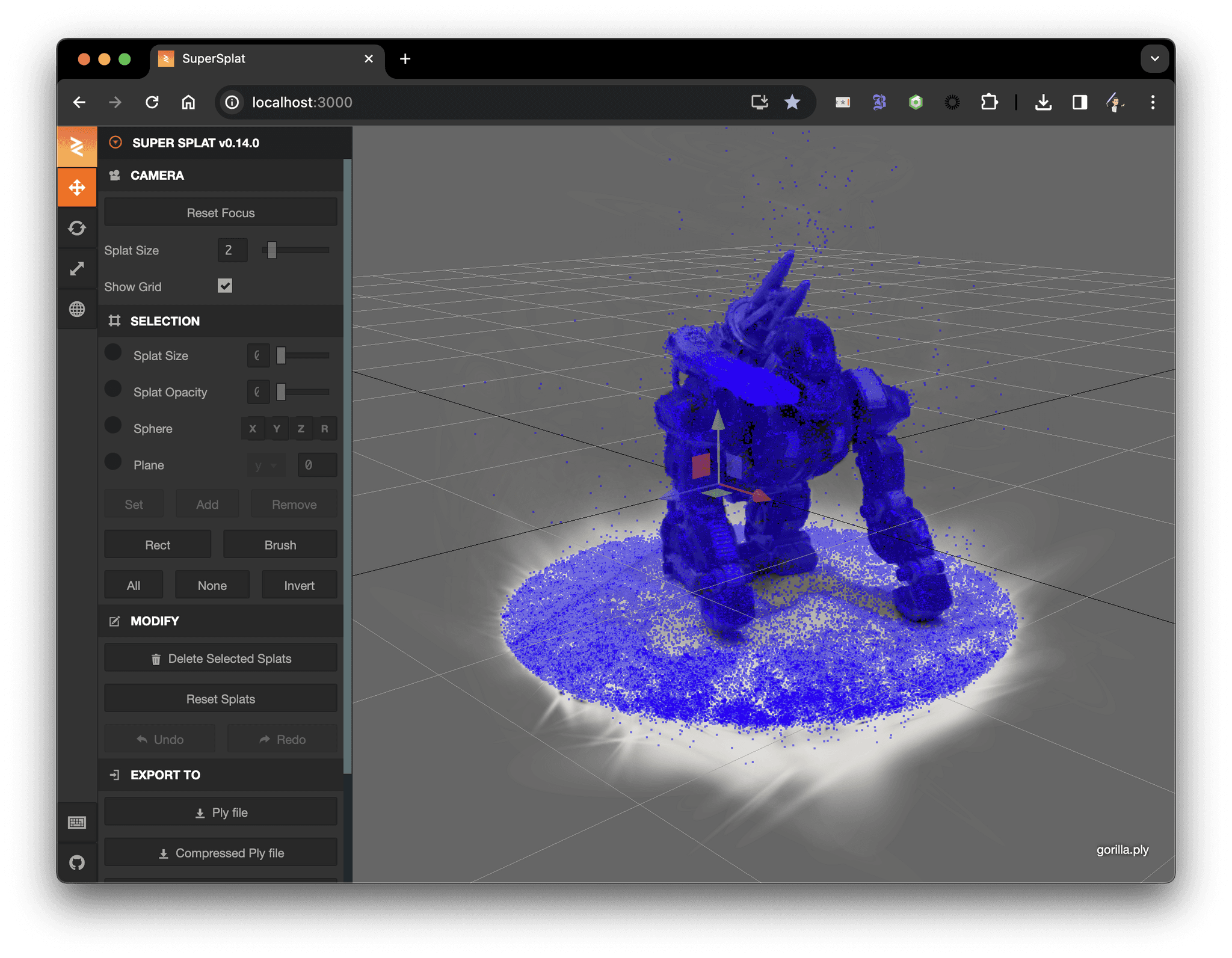
Why this is important: PlayCanvas powers many WebXR projects, including SuperSplat, listed on GoXR under Dev Resources — engine updates flow straight into the tools creators use.
Building WebXR yourself? These are the engines, frameworks, SDKs and standards behind the experiences on this site — plus guides and talks to learn from.